
Slope That Prevents Foundation Water Issues
Grading in Lafayette for building pads, drainage flow management, and access roads in subdivisions
Improper slope across flat south Louisiana terrain causes foundation moisture problems, driveway ponding, and yard flooding that persists after every heavy rain. Built From the Dirt Earthwork LLC establishes grades from survey specifications, calculates drainage slopes, and compacts surfaces to building code for new subdivision lots and commercial pads in Lafayette. Grading must finish before concrete crews form slabs or utility contractors trench for water and sewer lines, because elevation changes after those trades complete will require costly rework and delay occupancy schedules.
The work involves reading grade stakes or digital survey data, operating dozers and motor graders to move soil into specified elevations, and verifying slope with laser levels or GPS-guided equipment. Operators make multiple passes, checking low spots and high ridges against benchmark elevations until the surface matches plan specifications within tolerance. South Louisiana projects require deliberate slope away from building corners even when the surrounding terrain appears flat, because water will not drain naturally without engineered grade.
Arrange an on-site consultation to review survey elevations and drainage paths before grading begins.
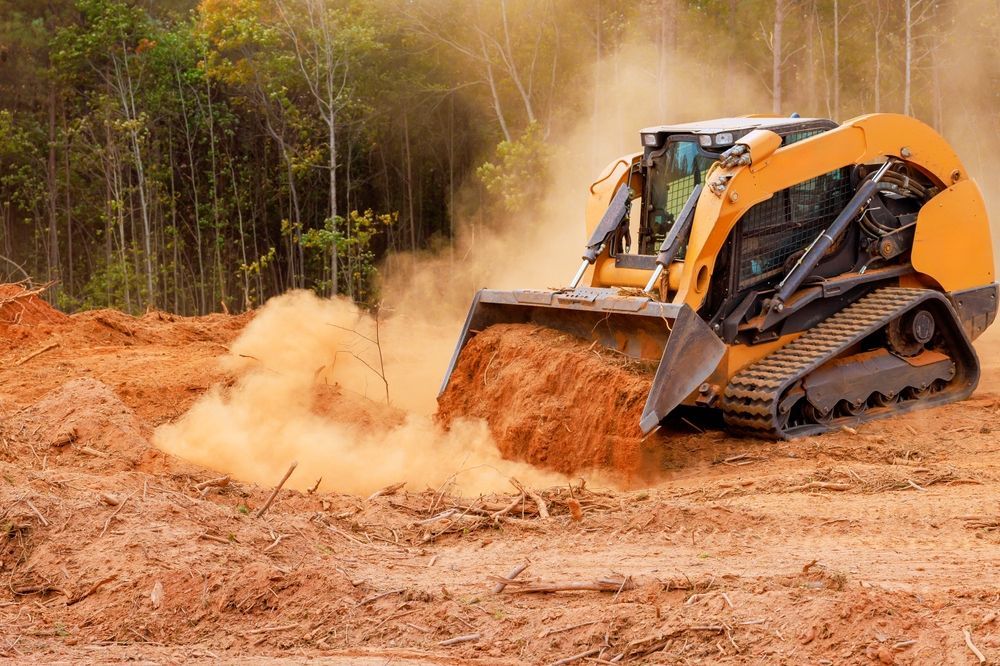
How Grading Addresses Drainage Flow
Flat terrain does not mean level ground—it means subtle elevation changes must be engineered rather than assumed. Grading establishes a minimum two percent slope away from foundations, directing stormwater toward swales, culverts, or retention areas instead of allowing it to pond against slabs or footings. Real-time elevation checks during equipment operation catch deviations before compaction locks in incorrect grades that would require rework after the next rain event reveals pooling.
Once grading finishes, you see building pads with defined corners at consistent elevations, access roads with crowned centers that shed water toward ditches, and swales with gradual slopes that convey runoff without erosion. Standing water no longer collects in yard depressions or along driveways after storms, and foundation perimeters remain dry because the surrounding ground slopes away from the structure. The surface is firm enough to support material deliveries and concrete trucks without creating ruts that alter drainage patterns.
Grading scope depends on whether the project involves finish grading for landscaping or rough grading that establishes pad elevations before utilities install. Subdivision work often requires coordination with neighboring lot elevations to ensure drainage from one property does not flow onto another, and commercial sites may need transition slopes between loading docks, parking areas, and stormwater detention ponds. Built From the Dirt Earthwork LLC handles recurring grading for new subdivision lots and coordinates with builders on final pad elevation adjustments before slab construction starts.
Answers to Frequent Grading Questions
Homeowners and builders preparing sites for construction or addressing existing drainage problems often want to know about slope requirements, timing, and verification methods.
What slope percentage does grading require for proper drainage in Lafayette?
Building codes typically require a minimum two percent slope away from foundations for the first ten feet, which translates to a drop of approximately 2.4 inches over that distance to prevent water from pooling against slabs or crawl spaces.
How do operators verify that grading matches survey specifications?
Laser levels project a reference plane across the site, and grade stakes marked with cut or fill measurements guide equipment operators to remove or add soil until elevations match the plan within a tolerance of one to two inches.
When should finish grading happen relative to utility installation?
Rough grading establishes pad elevations and drainage slopes before utility trenches go in, while finish grading smooths surfaces and fine-tunes slopes after backfilling is complete and before landscaping or paving begins.
Why does flat terrain in south Louisiana still require engineered grading?
Natural ground rarely provides consistent slope away from structures, and even a one-degree tilt toward a foundation will funnel rainfall against the slab, causing moisture intrusion, settling, and long-term structural issues that grading prevents.
What equipment operates during a typical grading project?
Dozers handle bulk soil movement and rough shaping, motor graders fine-tune surface elevations and slopes, and compactors consolidate the soil to prevent settling after grading is complete.
Built From the Dirt Earthwork LLC performs precision grading for residential subdivisions and commercial developments across Lafayette, coordinating elevation requirements with builders and inspectors throughout the construction sequence. Schedule a property assessment to identify drainage concerns and grading specifications before site work begins.